
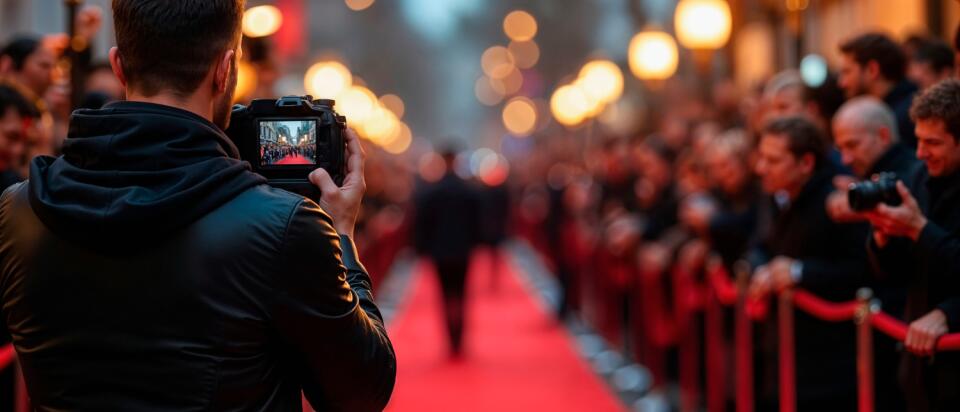
A Click, a Smile, a Perfect Event Moment. The photo is quickly taken and shared on social media to showcase your event's success. But what starts as straightforward public relations will involve more legal pitfalls in 2026 than ever before.
The moment an image goes online, it transforms from a cherished memory into a legally relevant data record – and the rules governing this have noticeably tightened.
Our foundational article on data protection for event photos has served many of you as a reliable compass. The principles of the GDPR (General Data Protection Regulation) and the German Copyright Act on Works of Art (Kunsturhebergesetz - KUG) explained there still form the basis.
However, in 2026, digital reality has reached a new level. While initial prohibitions of the EU AI Act are already in effect, the law will come into full force in August 2026. Combined with stricter jurisprudence regarding 'biometric data,' photos are fundamentally evaluated differently today than they were two years ago. Therefore, it's time for this crucial update. We will show you what you need to prepare for now and how to legally document your events this year.
What has solidified in recent years
The core themes remain, but the technological environment has changed. Here are the three most important developments you need to know for your 2026 planning:
Photos are (potentially) biometric data
The most significant re-evaluation in 2026: Photos of faces are increasingly viewed in the context of biometric data collection. Since social media platforms and photo software often perform AI-powered analyses (tagging, facial recognition) in the background, the risk potential of a simple upload has increased.
Consequence: The requirements for informed consent have increased. You no longer only need to inform your guests that the image will be published, but also that this happens on platforms that potentially use these data for profiling.
'Legitimate interest' is almost entirely fading for social media
Previously (approx. until 2024), it was common practice to invoke "legitimate interest" (Art. 6 Para. 1 lit. f GDPR) for event photos.
Update 2026: This argumentation is hardly tenable anymore for social media (Instagram, LinkedIn, TikTok) involving identifiable individuals. Courts and supervisory authorities almost always prioritize the protection interests of the depicted individuals – especially in light of uncontrolled AI processing and "scraping" by third parties – higher than the organizer's PR interest.
The "Context of Use" is decisive
It is no longer sufficient to obtain general consent for "social media." Jurisprudence demands transparency about the context. Is the photo only posted organically in a feed or used for a paid ad campaign (advertisement)? For the latter, you absolutely need explicit, separate consent in 2026, as the advertising nature more strongly impacts the right to one's own image.
Rule of Thumb for 2026:
Internal Documentation / Archive:
Legitimate interest is often still permissible.
Social Media / External Advertising:
Without consent, you're on extremely thin ice.
The 3 Most Important Questions for Event Organizers – Re-evaluated for 2026
Let's look at the well-known guiding questions from our original article through the lens of 2026.
Where will the photo be published?
A click is enough to share an event photo and to raise complex data privacy issues.
Own Website / Print: Here you retain data sovereignty. The risk is calculable. Consent is required for portraits; for atmospheric images (where individuals are merely "incidental"), legitimate interest may apply under strict conditions.
Social Media & US Platforms: Here you relinquish data sovereignty. Due to the platforms' algorithms, depicted individuals lose control. Recommendation 2026: No identifiable faces on social media without documented consent (e.g., via digital check-in systems).
Who will be photographed?
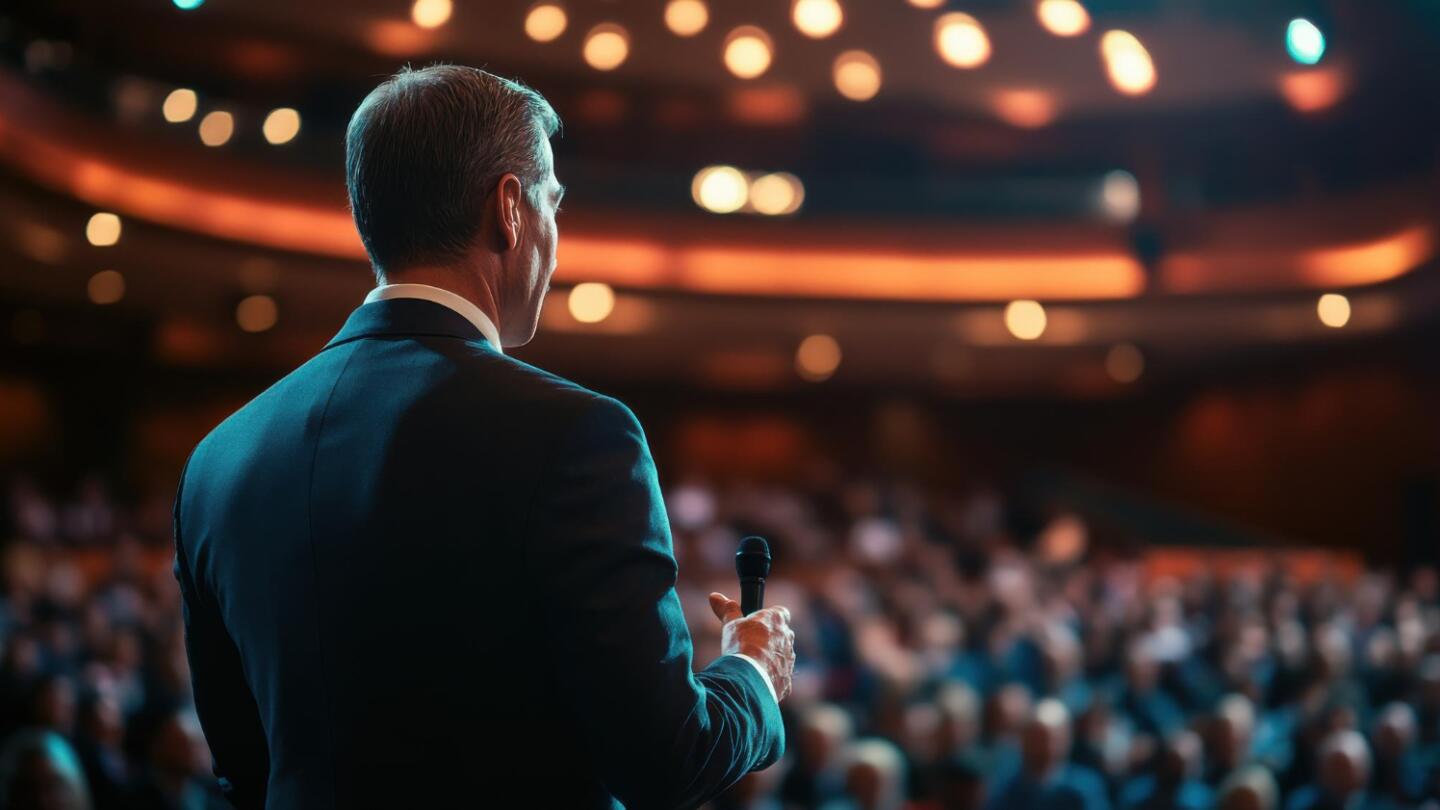
Even with public figures on a stage, the usage rights for images must be clearly defined.
Speakers & VIPs: Here, implied consent is often assumed, as they are "persons of contemporary history" for this event moment. Nevertheless: Contracts with speakers should include a clear clause on image usage.
Attendees (Individuals): Consent is absolutely mandatory.
The Crowd (Overview shots): This is the last safe haven for "legitimate interest." If the event itself is the focus and no person is singled out (no telephoto portraits from the crowd!), this is usually possible without individual consent – but only with very clear signage on site.
Is it a public or private event?
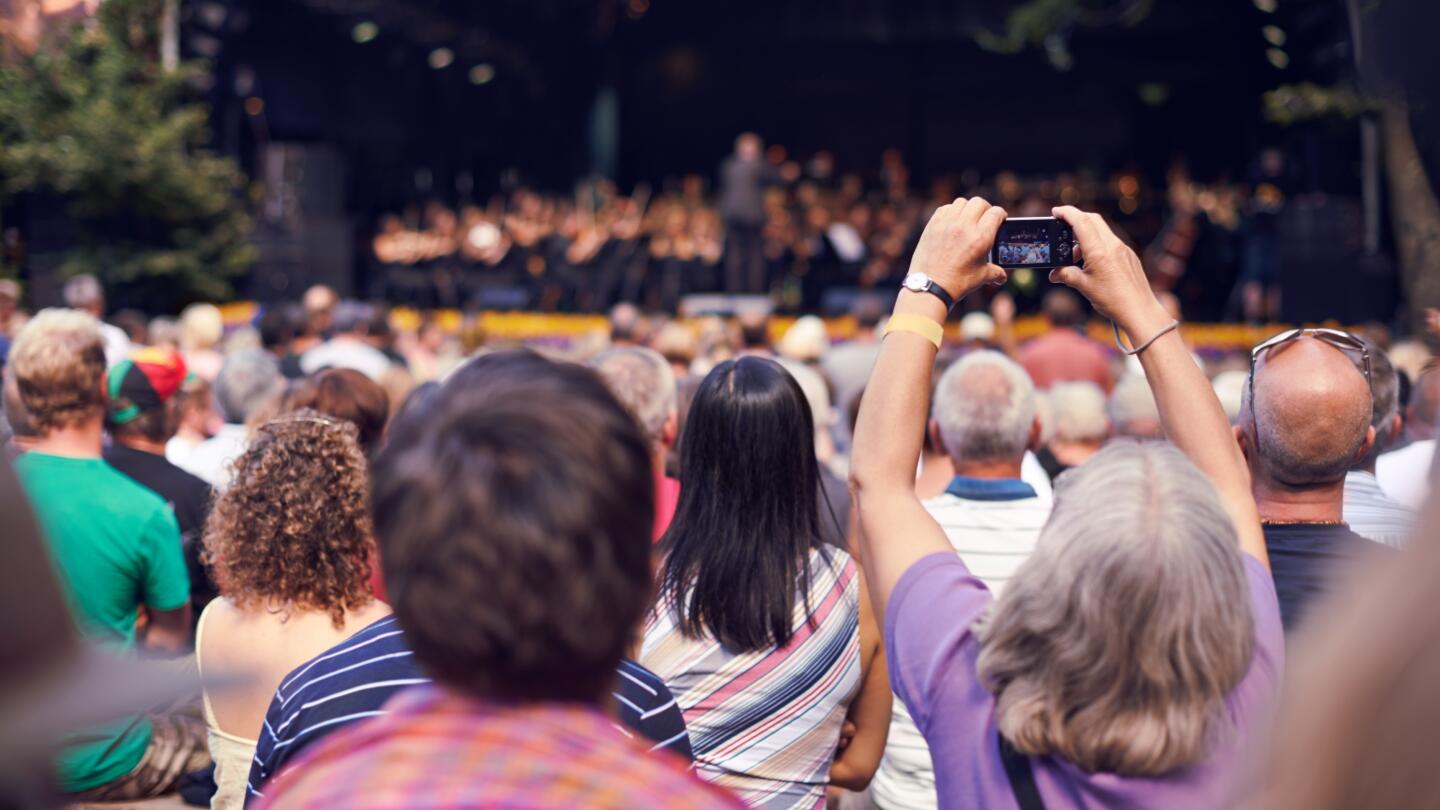
An overview of the crowd is usually unproblematic, focusing on individuals requires their consent.
Corporate Events (Internal): Here, the Employee Data Protection Act (§ 26 BDSG) often applies in combination with the GDPR. But beware: Employees also have a right to their own image. Casual photography without an option to object is still taboo in 2026.
Public Events: The expectation of being photographed exists. This facilitates the argumentation for overview shots, but it certainly does not replace consent for portraits or for commercial use.
Liability and AI: What you must ensure now
The responsibility lies with you as the event organizer (controller according to the GDPR).
A new aspect for 2026 when dealing with service providers:
If you commission photographers, contractually clarify (in the Data Processing Agreement or contract) how they process the images. Do they use cloud-based AI tools for image optimization where data ends up on third-party servers? This must be made transparent and legally secured under data protection law.

Conclusion: The most important take-aways at a glance
The legal requirements for event photos have undoubtedly increased in 2026, but with a strategic approach, you will stay on the safe side. Here are the most important cornerstones for your next event:
Consent is the new standard: For social media and external communication, no longer rely on "legitimate interest." Obtain granular consents in advance (e.g., during the ticketing process).
On-site Opt-Out: Offer a clear, highly visible solution for guests who do not wish to be photographed (e.g., colored lanyards or stickers), and brief your photo team accordingly.
Keep AI and Biometrics in mind: Pay attention to which platforms you distribute images to and prepare now for the labeling obligations of the AI Act (from August 2026).
Data Minimization: What you no longer need must be deleted. Define clear deadlines for your raw data and how to handle revocations.
A proactive and transparent approach to data protection in 2026 will not only protect you from significant fines but, above all, strengthen your guests' trust in your professionalism.
Legal Notice: This article and checklist are for informational purposes only and do not constitute legal advice from a lawyer. Due to the dynamic legal situation, we assume no liability for the accuracy, completeness, or timeliness of the information provided. Use is at your own risk.